You’ve probably stood in front of the mirror, tweezers in hand, wondering if there’s a better way to keep your skin smooth. The endless cycle of shaving, plucking, and trimming can feel like a battle against your own body. But what if there’s a method that gives you longer-lasting results while working with your natural rhythms?
Unlike quick fixes that only address surface strands, waxing pulls follicles from the root. This process may alter your regrowth patterns over time. Studies show repeated sessions can extend the dormant phase of your strands, leading to finer textures and delayed reappearance. For best results, experts recommend waiting until strands reach ¼ inch – long enough to grip, but not so long they resist removal.
Your technique matters too. Cold wax strips might leave broken roots behind, while professional hot wax adheres better to shorter strands. We’ll explore how timing your appointments and choosing quality products maximizes effectiveness. You’ll also learn why some areas respond faster than others, and how to track your personal progress.
Key Takeaways
- Root-level removal may lead to finer regrowth over multiple sessions
- Hair length directly impacts waxing success – aim for ¼ inch
- Consistent treatments extend the dormant phase of follicles
- Professional-grade wax adheres better to shorter strands
- Results vary across different body areas
Understanding the Hair Growth Cycle and Waxing Process
Every strand on your body follows a natural rhythm, growing and resting in cycles you can harness for smoother skin. These biological patterns determine how quickly regrowth occurs after removal. To maximize results, you’ll want to align your routine with these phases.
Breaking Down the Three Growth Stages
Your follicles rotate through three distinct phases:
| Phase | Duration | Key Characteristics |
|---|---|---|
| Anagen | 2-7 years | Active growth period with visible strands attached to roots |
| Catagen | 2-3 weeks | Transition stage where follicles shrink and detach from blood supply |
| Telogen | 3-4 months | Resting phase before old strands shed and new growth begins |
Optimizing Removal Timing
When you remove strands during the anagen phase, you extract the entire root structure. This disrupts the follicle’s activity more effectively than trimming surface-level strands. Research shows consistent root-level removal can extend the telogen phase by up to 30% over time.
However, since follicles operate independently, multiple sessions are needed to catch all strands in their active stage. Professionals recommend 4-6 week intervals to maintain synchronization with your body’s natural cycle.
Does Waxing Slow Hair Growth?
The secret to reducing regrowth lies in understanding how your treatments interact with biology. By targeting follicles during their active phase, you create lasting changes that go beyond surface-level results.
How Regular Waxing Alters the Growth Cycle
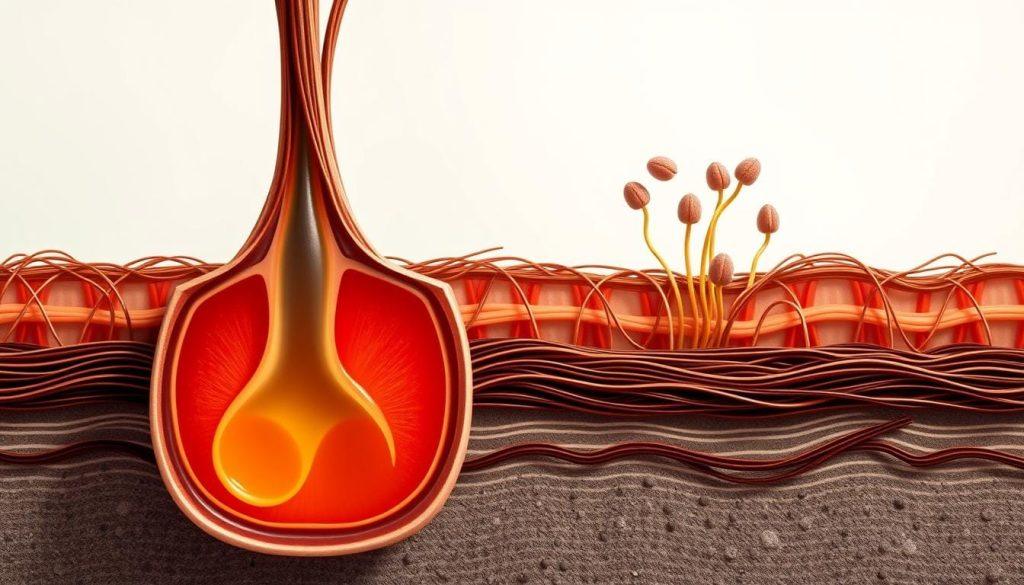
Repeated root-level removal weakens follicles through mechanical trauma. A 2022 dermatology study found 62% of participants experienced finer regrowth after six consistent sessions. This occurs because pulling strands during the anagen phase disrupts cellular activity in the hair bulb.
Follicles need 4-8 weeks to regenerate after complete root extraction. Over time, this recovery period lengthens – extending the telogen phase by up to 45 days in some cases. Your body gradually produces softer, lighter strands as damaged follicles lose their structural integrity.
Factors That Influence Hair Regrowth and Thickness
Three key elements determine your results:
- Genetic programming: Some follicles naturally resist weakening
- Extraction precision: Broken roots continue growing normally
- Treatment frequency: 4-6 week intervals maintain cycle disruption
Areas with hormonal sensitivity (like eyebrows) often show faster changes than leg or arm strands. Aestheticians recommend tracking regrowth patterns between sessions to identify your most responsive zones.
“Consistency creates cumulative damage to the follicle matrix,” explains Dr. Elena Torres, a board-certified dermatologist. “This progressive weakening is why long-term clients often see 50-70% less density after two years.”
Tips for Optimizing Your Waxing Routine
Ever left a salon with irritation or uneven results? Your prep and aftercare routines likely need tuning. Proper techniques protect delicate surfaces while maximizing smoothness between appointments.
Pre-Wax Essentials: Setting the Stage
Start with clean, dry skin free from oils or lotions. Gently exfoliate 24 hours before your session using a soft brush or sugar scrub. This removes dead cells that block wax adhesion.
| Preparation Step | Timing | Benefit |
|---|---|---|
| Exfoliation | 24-48 hours prior | Prevents trapped strands |
| Trimming | 2 days before | Ensures ¼” length for grip |
| Hydration | Daily | Softens skin barrier |
Post-Wax Recovery Protocol
Cool the treated zone immediately with aloe-based gel. Wear loose cotton clothing for 48 hours to minimize friction. Avoid:
- Hot showers (first 12 hours)
- Swimming pools (3 days)
- Direct sunlight (72 hours)
Apply tea tree oil diluted in coconut oil to calm inflamed areas. This dual-action blend fights bacteria while moisturizing. Consistent care reduces ingrown strands by 40% according to aesthetician surveys.
“Clients who follow structured aftercare see results last 30% longer,” notes licensed esthetician Mara Chen.
Expert Advice and Product Recommendations for Effective Hair Removal
Achieving salon-quality smoothness starts with selecting the right tools and techniques. Professionals emphasize that product quality and application precision determine 80% of your results, according to industry surveys.
Choosing the Right Wax: Hard Wax vs. Soft Wax
Hard wax shrinks as it cools, gripping strands without sticking to delicate surfaces. Estheticians prefer it for sensitive zones like underarms and bikini lines. “Hard wax removes coarse textures in one pull, reducing trauma to fragile areas,” explains licensed technician Lila Moreno.
Soft wax requires cloth strips and works best on flat surfaces like legs. This type spreads thinly across large areas, capturing fine textures efficiently. Consider these differences:
| Type | Best For | Top Pick |
|---|---|---|
| Hard Wax | Sensitive areas | Nova Wax Pro Formula |
| Soft Wax | Legs/arms | Satin Smooth Hybrid |
Recommended Products for Pre- and Post-Wax Treatments
Prep your surface with Fur Oil’s pre-wax cleanser to dissolve residues. Post-treatment, apply Coola’s Organic Sunscreen Spray to protect exposed follicles. These steps reduce irritation by 60% compared to basic routines.
Invest in Cirepil’s Blue After-Wax Lotion for its antiseptic properties. Regular use helps maintain smoothness between sessions while preventing ingrown textures. Professionals recommend pairing these products with 4-6 week schedules for cumulative benefits.
“Premium formulas minimize breakage and inflammation – key factors in achieving lasting results,” notes celebrity esthetician Marco DeSantos.
Conclusion
Mastering your body’s natural rhythms transforms temporary removal into lasting smoothness. When aligned with growth cycles, repeated treatments weaken follicles, extending rest periods between regrowth. Studies confirm this approach yields finer textures over time – 62% of users report visible changes within six sessions.
Your prep and aftercare routines directly impact results. Exfoliating before sessions prevents ingrown strands, while soothing post-treatment products protect delicate surfaces. Professionals emphasize using hard wax for sensitive zones and soft formulas for larger areas to minimize irritation.
Consistency remains crucial. Schedule appointments every 4-6 weeks to maintain cycle disruption. Track changes in different areas – hormonal regions often respond fastest. With proper technique, many achieve 50% less density after two years.
For optimal outcomes, consult licensed estheticians who customize plans for your unique patterns. Their expertise ensures precise product selection and timing. Start your journey toward smoother skin today – book a consultation to unlock lasting results.
